Coming up: The $9 trillion problem of global finance

3D chrome Dollar symbolThat global finance has been in a mess since the start of the global financial crisis in September 2008, is old news now. But the fact that a bigger mess might be awaiting it, should still make for news.
A January 2015 research paper titled
Global dollar credit: links to US monetary policy and leverage authored by Robert N McCauley, Patrick McGuire and Vladyslav Sushko who belong to the Monetary and Economic Department at the Bank for International Settlements (BIS), has been doing the rounds in the recent past.
As per this paper : “Since the global financial crisis, banks and bond investors have increased the outstanding US dollar credit to non-bank borrowers outside the United States from $6 trillion to $9 trillion.” In 2000, the number had stood at $2 trillion.
What this clearly tells us is that over the years there has been a huge jump in the total amount of borrowing that has happened in dollars, outside the United States. Hence, more and more foreigners(to the United States) have been borrowing in dollars.
A similar trend has not be seen in case of other major currencies like the euro and the yen. In case of the euro the number stands at $2.5 trillion. For the yen, the number is at just $0.6 trillion. “Moreover, euro credit is quite concentrated in the euro area’s neighbours,” the BIS report points out. Hence, a major part of the world continues to borrow in dollars.
The question is which countries have borrowed all this money that has been lent? As the BIS report points out: “Dollar credit to Brazilian, Chinese and Indian borrowers has grown rapidly since the global financial crisis…Dollar borrowing has reached more than $300 billion in Brazil, $1.1 trillion in China, and $125 billion in India. The rapid growth of bonds relative to loans is more evident in Brazil and India than in China.”
This is happening primarily because domestic interest rates in these countries are on the higher side in comparison to the interest rates being charged on borrowing in dollars. Further, in the aftermath of the financial crisis, the Federal Reserve of the United States, initiated a huge money printing programme and at the same time decided to maintain the federal funds rate between 0-0.25%. This led to more and more borrowers deciding to borrow in US dollars.
“A low level of the federal funds rate…is associated with higher growth of dollar loans to borrowers outside the US…A 1 percentage point widening in a country’s policy rate relative to the federal funds rate is, on average, associated with 0.03% more dollar bank loans relative to GDP in the following quarter ,” the BIS paper points out. And that explains the rapid expansion of dollar loans.
The federal funds rate is the interest rate at which one bank lends funds maintained at the Federal Reserve to another bank on an overnight basis. It acts as a sort of a benchmark for the interest rates that banks charge on their short and medium term loans.
Interestingly, countries which are referred to as emerging market countries have borrowed close to $4.5 trillion of the total $9 trillion. “The emerging market share – mostly Asian – has doubled to $4.5 trillion since the Lehman crisis, including camouflaged lending through banks registered in London, Zurich or the Cayman Islands,” points out Ambrose Evans-Pritchard
in a recent piece in The Telegraph.
So what are the implications of this? First and foremost the world is now more closely connected to the monetary policy practised by the Federal Reserve of the United States. As the BIS paper points out: “Changes in the short-term policy rate are promptly reflected in the cost of $5 trillion in US dollar bank loans.” What this basically means is that if the Federal Reserve chooses to raise the federal funds rate any time in the future, the interest that needs to be paid on the dollar debt will also go up. And with the huge amount of money that has been borrowed, this could precipitate the next level of the crisis, if the borrowers are unable to pay up on the higher interest. One of the dangers that can arise is “if borrowers need to substitute domestic debt for dollar debt in adverse circumstances, then the exchange rate would come under pressure.”
There are other risks as well that need to be highlighted. There is a growing concern that companies in emerging markets have borrowed in dollars to essentially fund carry trades, where they are borrowing in dollars at low interest rates and then lending out that money at higher interest rates in their own country. Hence, nothing constructive is happening with the money that is being borrowed. It is simply being used for speculation.
Many of the companies borrowing in dollars are essentially borrowing for the first time in dollars. And this leads to the question whether the lenders have carried out an adequate amount of due diligence. Further, some of this borrowing may not have been captured in domestic debt statistics of countries. This means that countries may have actually borrowed more than their numbers suggest. Hence, when the time comes to repay this can put pressure on foreign exchange reserves. Lastly, with firms borrowing in dollars, the domestic policy-makers like central banks and finance ministries, may be misled “by the slower pace of domestic bank credit expansion”. This could mean lower interest rates when they should actually be raised. Lower interest rates can lead to more asset bubbles in financial markets.
What is not helping the cause is the fact that the dollar has appreciated rapidly against other major currencies. It has appreciated by around 25% since June 2014 against other major currencies. This means in order to repay the dollar loans or even to pay interest on it, the borrowers need a greater amount of local currency to buy dollars.
To conclude, it is worth repeating what I often say: before things get better, they might just get worse. Keep watching.

(Vivek Kaul is the author of Easy Money. He tweets @kaul_vivek)

The column originally appeared on Firstpost on Mar 25, 2015 
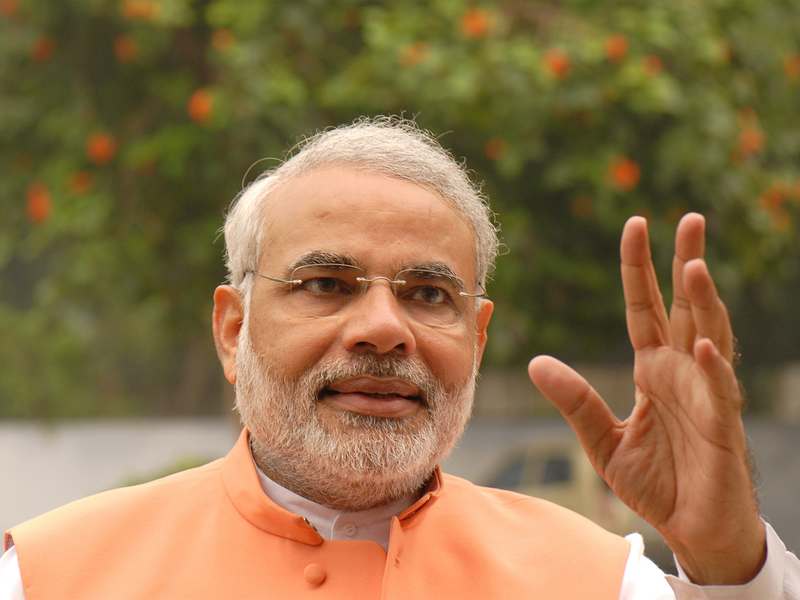
India cannot be governed only out of Delhi

narendra_modiOne of the better things that has happened since Narendra Modi came to power in May 2014, is the promotion of cooperative federalism. Cooperative federalism is essentially a system in which the governments at the central, state and local level cooperate with another to solve common problems. The system is not dominated by the central government.
The Indian Constitution gives pre-eminence to the central government. As the former finance minister and senior leader of the Bhartiya Janata Party explained in a speech: “The first Article of the Constitution talks about India that is Bharat being a Union of States. It is not a federation of states. It is described as the Union of states and there are a number of articles in the Constitution which emphasise the overwhelming character, the unitary character of our polity. Article 3 gives the power to the Parliament of India to create a new state, to bifurcate states, to change the boundary of states, to change the name of a state. Now can you do it in a federation of states? This is a power which gives pre-eminence to the Centre, to the Union, through its Parliament.” There are several other articles which give pre-eminence to the central government.
Or take the case of the Planning Commission. It was not a constitutional body and was set up only by an executive order of the central government. The Commission had a huge role to play in the money that the states received from the central government over the years.
The Indian Constitution was framed in the late 1940s and came into effect on January 26, 1950. The challenges that a newly independent country faced were very different from what it faces now. As Sinha said: “When the Constitution was framed and given to the people of this country in 1950, all this was very well, because we had challenges and those challenges had to be met and therefore we created a Union of States and not a Federation of States because India had to remain united. Over a period of time, as these threats and dangers have receded.”
Also, a country as diverse as India is, cannot be governed out of New Delhi. Currently there are 66 central government schemes. But does every state need all of these schemes? Does one state need one scheme more than the other? And at a more basic level does this one size fits all approach really work? These are questions that need to be answered.
In fact, in his first independence speech Modi dissolved the Planning Commission. It has been replaced by the NITI Aayog. At the first meeting of the NITI Aayog’s governing council some interesting questions were raised by the chief ministers of various states. The chief minister of Kerala, Oomen Chandy, rightly pointed out that schemes like Jan Dhan Yojana and Beti Bachao, had little relevance in his state, which has very good social development indicators.
Manohar Lal Khattar, the chief minister of Haryana, suggested that central government schemes should be done away with totally. Vasundra Raje, chief minister of Rajasthan suggested that number of such schemes should be limited to ten.
The central government allocates funds to these schemes and then monitors them (hopefully). But they need to be managed at the local level. And how is it possible for the bureaucracy at the local level to manage 66 schemes at the same time? So, there is no denying that the number of central government sponsored schemes need to come down. A committee of chief ministers has been formed to study these schemes.
Another interesting thing that has happened is that the fourteenth finance commission has increased the states share of central taxes to 42% from the earlier 32%. As the commission said in its report: “increasing the share of tax devolution to 42 per cent of the divisible pool would serve the twin objectives of increasing the flow of unconditional transfers to the states and yet leave appropriate fiscal space for the Union to carry out specific purpose transfers to the states.”
Increasing the flow of unconditional transfers to states also goes a long way in strengthening cooperative federalism. The dependence of the state governments on central government grants will come down. Along with this, the central government has also decided to hand over all the money coming from the auctioning of coal blocks to the states in which the blocks are located.
One question that crops up here is whether the states have the systems in place to spend this money that is likely to come to them in the years to come. As economists Taimur Baig and Kaushik Das of Deutsche Bank Research ask in a recent research note: “The question is whether the states have the administrative capability and willingness to be able to spend the increased allocation, productively and transparently. This remains an open question at this stage.”
Further, it needs to be pointed out that the combined fiscal deficit of the states has been falling over the years. In 2009-2010, it amounted to 2.91% of the gross domestic product(GDP). In 2014-2015, it is expected to be at 1.90% of the GDP. Fiscal deficit is the difference between what a government earns and what it spends.
But the overall average number does not tell us the complete story. Within this, some states have done well on the fiscal front whereas some haven’t. As State Finances: A Study Of Budgets Of 2013-14 authored by the RBI points out: ““Many state governments have accumulated sizeable cash surpluses in recent years, reflecting the fiscal consolidation process as well as their precautionary motive of building a cushion for their expenditures.”
“On one end of the spectrum, there are states such as Orissa, Maharashtra, Tamil Nadu and Karnataka whose fiscal position is in better shape, while at the opposite end there are states such as Bihar, West Bengal and Uttar Pradesh which fare poorly in terms of fiscal prudence,” Baig and Das point out.
States which haven’t done well on the fiscal front are also the ones which have a larger population and at the same time they lag behind the country when it comes to per capita income. This means that they will get a higher share of central taxes as can be seen from the following table.
As per the formula Uttar Pradesh (18%), Bihar (9.7%) and West Bengal(7.3%) will corner 34% of the central government taxes. These are the states where money actually needs to be spent. Nevertheless, the question is whether these states have the mechanisms in place to spend the extra money that will come to them. As Baig and Das point out: “States which are poor and populous (but fiscally weak), such as Uttar Pradesh, Bihar and West Bengal would be receiving a higher allocation of the increased transfer of funds from the central government. Transferring larger share of resources to states which have historically been fiscally imprudent, could prove to be counterproductive.”
This is something which could hold back the benefits of cooperative federalism in the years to come and needs to be set right. Ultimately the state governments are much closer to the people and have a much better understanding of where the money is best spent.

The column originally appeared on The Daily Reckoning on Mar 25, 2015

Why money printing hasn’t led to inflation

bubble

In response to the last column Janet Yellen’s excuses for not raising interest rates will keep coming a reader wrote in asking why all the money printing that has happened since September 2008 in the aftermath of the financial crisis, hasn’t led to inflation.
In this column I try and answer that question. Economist John Mauldin estimates that central banks have printed $7-8 trillion since the start of the financial crisis. In another estimate, author and financial derivatives expert Satyajit Das points out balance sheets of the major central banks have expanded from around $5 trillion prior to 2007–2008 to over $18 trillion.
The central banks printed this money (or rather created it digitally through a computer entry) and used it to buy government and private bonds and this has led to the expansion of their balance sheets. In fact, the amount of money pumped into the financial systems of the developing countries has been so huge that it would be suffice to purchase a large flat-screen TV for every single individual in the world, points out Das.
By buying bonds, central banks pumped the printed money into the financial system. This was done primarily to ensure that with so much money floating around, the interest rates would continue to remain low. At low interest rates people would borrow and spend. This would help businesses grow and in turn help the moribund economies of the developing countries.
But money printing should have led to inflation as a greater amount of money chased the same amount of goods and services. Milton Friedman, the most famous economist of the second half of the twentieth century, wrote in
Money Mischief – Episodes in Monetary History: “The recognition that substantial inflation is always and everywhere a monetary phenomenon is only the beginning of an understanding of the cause and cure of inflation…Inflation occurs when the quantity of money rises appreciably more rapidly than output, and the more rapid the rise in the quantity of money per unit of output, the greater the rate of inflation. There is probably no other proposition in economics that is as well established as this one.”
Nevertheless that did not happen. Inflation remains very close to 0% in large parts of the developed world. Why is that the case? Japanese economist Richard Koo perhaps has an answer. Koo calls the current state of affairs in the United States as well as Europe a balance-sheet recession. Japan had seen a huge real estate as well as stock market bubble in the 1980s. In fact, such was the confidence in the high home prices continuing that by the end of the 1980s Japanese home buyers were even taking out 100-year home loans or mortgages.
As Stephen D. King writes in
When the Money Runs Out: “By the end of 1980s, it was not unusual to find Japanese home buyers taking out 100-year mortgages, happy, it seems, to pass the burden on to their children and even their grandchildren. Creditors, meanwhile, naturally assumed the next generation would repay even if, in some cases, the offspring were not more than a twinkle in their parents’ eyes. Why worry? After all, land prices, it seemed, only went up.”
That did not turn out to be the case. The stock market bubble started bursting in December 1989, and the real estate bubble followed. Koo feels the current Western situation is very similar to that seen in Japan in 1990, when both the stock market bubble and the real estate bubble had burst.
What does this imply in the current scheme of things? People in the developed world had taken on huge loans to buy homes in the hope that prices would continue to go up in perpetuity. But that wasn’t to be. Once the bubble burst, housing prices crashed. This meant the asset (i.e., homes) people had bought by taking on loans had lost value, but the value of the loans continued to remain the same. Hence, people needed to repair their individual balance sheets by increasing savings and paying back debt. This act of deleveraging, or reducing debt, brought down aggregate demand and threw the economies in the developed countries into a balance-sheet recession.
A similar thing happened in Japan as well in the 1990s. In the aftermath of the bubbles bursting the Japanese carried out quantitative easing where they bought bonds in the hope of maintaining low interest rates, so that people would borrow and spend. Nevertheless, that did not happen because people were busy paying off their old loans.
A similar dynamic is at play in the developed countries at this point of time. Hence, people are not borrowing and spending at the same rate as they are expected to, because they are busy paying off old loans. As Tim Harford explains in
The Undercover Economist Strikes Back: “Printing money creates inflation only if people want to spend the money right away. And perhaps they don’t.”
While, there has been no inflation in the conventional sense of the term, what the world is seeing instead is asset price inflation. A lot of the printed money has been borrowed at very low interest rates by institutional investors and has found its way into financial markets all over the world.
Other than this money briefly went into gold and then into other physical assets as well. As Gary Dugan of RBS told me in an interview sometime back: “Gold went up as much as it did in its last wave. If you look at Sotheby’s and Christie’s, in the art market, they are doing extremely well. The same is true about the property market. Places which are in the middle of a jungle in Africa, there prices have gone upto $100,000 an acre. Why? There is no communication. No power lines.”
This explains why there is no inflation but there is asset price inflation for sure. To conclude, it is important to understand something that Harford writes: “The Federal Reserve(and other central banks) spent decades … acquiring a reputation for waging a ruthless, unending war against inflation. That reputation is so powerful and so valuable that people naturally wonder whether the Federal Reserve really would encourage inflation once the slump ended. The trouble is that if people don’t believe that threat, they won’t start spending and the slump will continue.”


The column originally appeared on The Daily Reckoning on Mar 24, 2015

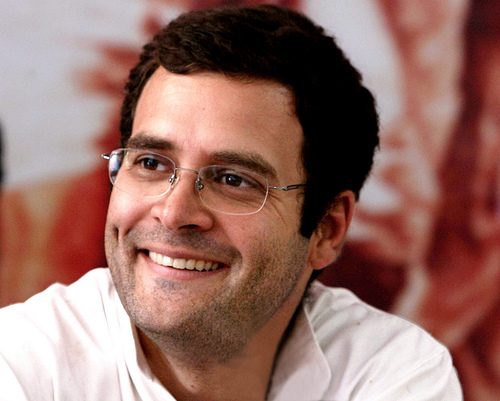
Management lessons we can learn from Rahul Gandhi, but he won’t

rahul gandhi

Vivek Kaul

Rahul Gandhi, the vice president of the Congress party, is on an extended vacation. This at a point of time when the first half of the budget session was under progress.
The Narendra Modi government has been trying to push a lot of new legislation through the Parliament in the recent past. And the fact that it doesn’t have enough MPs in the Rajya Sabha, it has had problems pushing through legislation. The opposition parties have ganged up together and managed to hold up the land acquisition ordinance, for one.
The point is that Rahul should have been in New Delhi during this time and been leading the opposition against the government. Instead, he is out on a holiday.
The bigger worry for Rahul should be that if he wants to keep his family owned Congress party relevant, he needs to reinvent both himself and his party. A good way to look at the Congress party is as an organization which is failing.
As Cass R. Sunstein and Reid Haste ask in Wiser—Getting Beyond Groupthink to Make Groups Smarter: “Suppose that you are a leader of an organization and that is not doing well, perhaps because it is stuck in old ways of thinking…What can you do?”
After asking this question the authors offer the example of Intel: “Intel Corporation, a large American corporation, faced exactly this problem in the 1980s. After fourteen years of profits it was losing a lot of business in the memory chip market, which it had pioneered. In a dramatic move, the company decided to abandon the entire market,” write the authors.
Why did Intel make this decision? Andrew Grove, who at that point of time was the President of Intel and would later become its CEO as well as Chairman recounts in his book Only the Paranoid Survive: “I remember a time in the middle of 1985, after this aimless wandering had been going on for almost a year. I was in my office with Intel’s chairman and CEO, Gordon Moore, and we were discussing our quandary. Our mood was downbeat. I looked out [of] the window at the Ferris wheel of the Great America amusement park revolving in the distance, then I turned to back to Gordon and I asked, “If we got kicked out and the board brought in a new CEO, what do you think he would do?” Gordon answered without hesitation, “He would get us out of memories.” I stared at him, numb, then said, “Why shouldn’t you and I walk out the door, come back and do it ourselves?””
This a very simple story which has a huge lesson. Organizations which are stuck in the old way of doing things need to get rid of their memories. “For Intel, it initiated a spectacularly successful strategy. The story suggests that when a group is aimlessly wandering or on a path that does not seem so good, it is an excellent idea to ask, “If we brought in new leadership, what would it do? Asking that simple question can break through a host of conceptual traps,” write Sunstein and Haste.
This is something that Rahul and the top leadership of the Congress party need to ask themselves. The party’s core idea of socialism and garibi hatao has been rejected by the voters, for the simple reason that it has been espousing the idea for more than four decades now. And even after four decades the ordinary Indian continues to be poor. So clearly what this tells him is that the Congress party was never serious about eradicating poverty. If it was it would have managed to eradicate poverty by now, given that the party has been in power in each of the decades since independence.
Hence, the party needs a new idea. And that will only come if one of the Gandhis comes up with something given that the party revolves around them. At this point of time this Gandhi has to be Rahul.
Nevertheless, it doesn’t seem likely that Rahul will do anything, if his lackadaisical leadership until now is anything to go by. Gurcharan Das makes a very interesting point in India Unbound about family owned businesses. As he writes: “Pulin Garg, the thoughtful professor at the Indian Institute of Management, Ahmedabad…used to say, “Haweli ki umar saath saal[The life of a family owned business is sixty years.””
The Congress party in its current form was formed when Rahul’s grandmother, Indira Gandhi, split from the original Congress party in 1969. Since then the party became a family run organization and has constantly been run by the Gandhis except for a brief interlude in the 1990s, when Rajiv Gandhi, Rahul’s father, was assassinated and his mother Sonia did not want to enter politics.
Given this, the party since 1969, or for a period of close to 46 years has been a family run organization, and its approaching the 60 year cut off for survival.
Rahul is the third generation of the Gandhi family running the party. And normally family owned businesses shut-down in the third generation. As Das writes: “Thomas Mann expressed…in Buddenbrooks, arguably the finest book ever written about family business. It describes the saga of three generations: in the first generation the scruffy and astute patriarch works hard and makes money. Born into money, the second generation does not want more money. It wants power…Born into money and power, the third generation dedicates itself to art. So the aesthetic but physically weak grandson plays music. There is no one to look after the business and it is the end of the…family.”
Let’s look at the above paragraph in the context of the Congress party. Indira Gandhi built the party in its current form. Rajiv enjoyed the power in the aftermath of her assassination. Sonia entered politics because the Gandhi family was used to power by then. And now Rahul, the weak grandson, is busy driving it into the ground.

(Vivek Kaul is the author of the Easy Money trilogy. He tweets @kaul_vivek)  

The column originally appeared on Firstpost on Mar 24, 2015

Modi’s mann ki baat on land acquisition is the first attempt to explain reform in 25 years

narendra_modi
In a column I wrote on February 27, 2015
, I had said that prime minister Narendra Modi should talk to the people of this country directly through his mann ki baat programme on All India Radio. Modi spoke to the people of India directly yesterday on mann ki baat and addressed the contentious issue of land acquisition.
Among other things he criticized the Congress party which has been protesting against The Right to Fair Compensation and Transparency in Land Acquisition, Rehabilitation and Resettlement (Amendment) Ordinance, 2014.
Modi said that “those projecting themselves as sympathisers of farmers and undertaking protests,” had been using the Land Acquisition Act 1894, a 120 year-old law for 60-65 years after independence. In the process he exposed the hypocrisy of the Congress party, which has been in power in every decade after independence, and had the opportunity to set things right on the land acquisition front. But it never went around to doing this.
The Land Acquisition Act 1894, had been the law of the land until 2013. This Act gave unparalleled powers to the government to acquire land. A 1985 version of this Act stated: “Whenever it appears to the [appropriate Government] the land in any locality [is needed or] is likely to be needed for any public purpose [or for a company], a notification to that effect shall be published in the Official Gazette [and in two daily newspapers circulating in that locality of which at least one shall be in the regional language], and the Collector shall cause public notice of the substance of such notification to be given at convenient places in the said locality.”
This was not surprising given that the law came into being when the British ruled India. This allowed governments all over India to acquire land from the public. Many governments passed on this land to corporates, and in the process both the government and the corporates made money. The only one who did not make money was the individual whose land was being acquired. Of course, this did not go unnoticed. People saw politicians and corporates making a killing in the process. And the trust that is required for any system to work completely broke down. In 2013, the Congress led United Progressive Alliance (UPA) brought in The Right to Fair Compensation and Transparency in Land Acquisition, Rehabilitation and Resettlement Act 2013.
One of the major provisions of the Act was that private companies acquiring land would require the prior consent of at least eighty percent of the affected families. In case of public-private partnerships(PPP) the prior consent was required from at least seventy percent of the affected families.
The ordinance brought in the Modi government is essentially the same as the 2013 Act, except for a few changes. The ordinance does away with the requirement of prior consent for land being acquired for affordable housing, defence, defence production, rural infrastructure including electrification, industrial corridors etc. There is nothing wrong with this change.
Also, the 2013 Act stipulated that the land acquisition carried out under 13 Acts of Parliament which dealt with land acquired for the purpose of atomic energy, highways, national highways, mining, railways, metro etc., were exempted from the Act. The 2014 ordinance did away with this distinction, which meant that land being acquired under these Acts will also be compensated at the same rate as promised in the 2013 Act. Doing away with this distinction is a step in the right direction.
Prime minister Modi in his address pointed out that maximum land is acquired under these 13 acts. “If we hadn’t approved this amendment, then the farmer would have continued losing land to projects with low compensation,” he said. He also put a rhetorical question to the people of this country: “Tell me if what we did was wrong?…Can someone tell me if this improvement goes against farmers?”
As per the 2013 Act, for rural areas the minimum compensation promised is anywhere between two to four times the market value of land along with the value of the assets on that land. For urban areas the minimum compensation promised is two times the market value of land along with the value of the assets on that land. So, land acquired under the 13 Acts of Parliament will also be compensated at the same rate as the land acquired for other projects.
Modi in his address clarified that the “ordinance does not change the compensation legislated in the 2013 Act one bit.” He also addressed the genuine concern of people that more than the land that is required for a project is typically taken on. He assured them that in the days to come there would be a proper assessment of how much land will be required for a project and this will ensure that excess land is not acquired.
Indian corporates over the years have acquired land through the government and become lazy in the process. Also, many of them started to see themselves as landlords and wanted land just for the heck of it. This can be said from the inefficient use of industrial land in India. If Modi follows what he has said that will be another step in the right direction. It will also do a lot to rebuilt the trust required for the process of land acquisition to work efficiently.
Agriculture, forestry and fishing form around 18% of the total economic output of the country. Data from the India Brand Equity Foundation, a trust established by the ministry of commerce and industry, points out that agriculture “employs just a little less than 50 per cent of the country’s workforce”.
If nearly 50% of country’s workforce is engaged in an activity which produces only 18% of its economic output, there is something that is not quite right about the entire scenario. What this clearly tells us is that too many Indians are dependent on agriculture and this number needs to come down. The situation gets even worse once you take into account the fact that most people who work on farms don’t totally depend on income from the farm. Only 17 percent of them survive entirely on money from their farm.
Modi addressed this issue as well by saying: “In every household, the farmer wants only one son to stay in farming. But he wants other children to get out there and work because he knows that in order to run a household in this day and age different endeavours need to be made.” He then went to say that given this scenario what is wrong with the government acquiring land for building an industrial corridor and ensuring that jobs are created in the vicinity of where farmers live. This was another important issue that Modi addressed in the programme.
To conclude, economic reforms in this country have also been carried out through stealth. No government in this country has ever made an effort to explain economic reform to people. This was the first time since the process of economic reform started in 1991, when someone has made an effort to explain it in simple layman terms to the people of this country. In fact, what Modi has started needs to continue. Other leaders of the Bhartiya Janata Party now need to take this forward by talking to the people of this country directly.

The column originally appeared on www.firstpost.com on Mar 23, 2015

(Vivek Kaul is the author of the Easy Money trilogy. He tweets @kaul_vivek)